Showing posts with label EMP2. Show all posts

Friday, 3 June 2022

Opel Quality offensive in full swing

  • All-time high: Launch quality improved by 25 per cent in just one year
  • Ambitious goal: Number 1 in quality among volume automakers
  • Analysis results: New methods introduced to prevent faults
  • Currently: Top scores for Opel models in ADAC breakdown statistics and TÜV Report

Opel Corsa 

Opel quality for passenger cars and light commercial vehicles (LCV) is at an all-time high. Within the past twelve months, for example, launch quality of new cars has been increased by 25 per cent. This value results from the manufacturer's internally defined production standards as well as from customer feedback within the first year after purchase. Most recently launched Opel Corsa and Opel Mokka models demonstrate first-class production quality right from the start – regardless of whether they are efficient combustion engines or battery-electric vehicles.

Opel Corsa-e

There are good reasons for this quality improvement: Opel has set itself the goal of zero faults. To achieve this, the Rüsselsheim automaker has also introduced new analysis methods that have a predictive effect in production. Such forecasting systems recognise when parameters change in such a way that they could lead to possible errors in production and intervene preventively. Result: no faulty parts are produced in the first place, production continues undisturbed, and quality is consistently high.

Opel Mokka GS Line

“At Opel and throughout Stellantis Group, we have set ourselves ambitious quality targets. We want to become the number 1 among volume manufacturers. Everywhere where faults are eliminated, we increase quality, increase customer satisfaction and at the same time also reduce our costs,” says Opel CEO.

Opel Mokka-e

At the German sites in Rüsselsheim and Eisenach, the switch to the latest Group's platform has also led to further improvements. Uniform platform strategy and the reduction of unnecessary complexity are important factors for the high quality and reliability of the vehicles. At Opel's headquarters, series production of the all-new Astra generation has just begun. Here, the five-door Opel Astra and soon also Opel Astra Sports Tourer estate will roll off the production line with German precision. 

All-New Opel Astra: Assembly in Rüsselsheim 

All versions of the Opel Grandland are manufactured in Eisenach to the highest quality standards. This is also confirmed by the latest TÜV report, in which Opel's SUV flagship was ranked an excellent 11th overall out of all 128 models inspected. In addition, according to the 2022 ADAC breakdown statistics, Opel models in various market segments, from Grandland and Crossland to ADAM, stand out as reliable used cars.

All versions of the Opel Grandland are manufactured in Eisenach

Opel engineers are also focused on further improving long-term quality. To this end, cooperation with suppliers has been intensified. Engineers speak of “robustness” here when defining running times and standards for parts and components. In addition to the well-known customer satisfaction studies, the quality guardians from Rüsselsheim also evaluate reviews and suggestions in forums and other social media channels. Furthermore, Opel dealers are involved as early as possible to learn from them, from the customer's point of view, where further improvements are possible. All feedback is taken seriously and seen as an opportunity to improve quality.

Wednesday, 1 September 2021

All-New Opel Astra Makes World Premiere in Rüsselsheim

  • Centre stage: Opel CEO Uwe Hochgeschurtz presents All-New Opel Astra
  • E-Offensive: Now as plug-in hybrid and as fully electric Opel Astra-e from 2023
  • Premiere guest: Brand ambassador Jürgen Klopp thrilled by All-New Opel Astra
  • From October: New Astra orderable for entry-level price of €22,465
  • Made in Germany: Sixth Opel Astra generation designed, developed and produced in Rüsselsheim

All-New Opel Astra Makes World Premiere in Rüsselsheim

A NEW BLITZ IS BORN – under this motto Opel presented the all-new sixth generation of the Astra in Rüsselsheim today. In the presence of 180 journalists and in front of around 500 other media representatives via livestream, new CEO Uwe Hochgeschurtz presented the newcomer on his first day at Opel. Opel boss was supported by Liverpool manager Jürgen Klopp. Opel brand ambassador was thrilled by the new Astra. Klopp had the opportunity to drive a pre-production model for a few kilometres during a visit to the Opel Design studios in the summer. For the first time, the bestseller with the Blitz is now electrified. All-new Opel Astra will be available as plug-in hybrid when the order books open in October. Purely battery-electric Opel Astra-e will additionally come onto the market in 2023. The new Astra generation is also available with highly efficient petrol and diesel engines. So customers can select their drivetrain of choice. Prices for the new Opel Astra start at €22,465.


Opel CEO Uwe Hochgeschurtz presents All-New Opel Astra

“A fantastic car! All-new Opel Astra will open an exciting new chapter in the history of Opel compact class models. This will be the first time that we offer both a battery-electric and a plug-in hybrid version of the same model. I am confident that the new Opel Astra and Astra-e will make a powerful impression and attract many new customers to the brand,” said Opel CEO Uwe Hochgeschurtz at the world premiere in Rüsselsheim.

Opel brand ambassador Jürgen Klopp and Opel CEO Uwe Hochgeschurtz

And Opel brand ambassador Jürgen Klopp described the first impressions he got from a pre-production vehicle: “I had the chance to drive a camouflaged Astra plug-in hybrid – really very impressive. Quiet and powerful at the same time, the handling almost like a sports car. And the design: bold, innovative, creative. Well done Opel!”

30 years of Opel Astra: Bestseller and face of the brand

Opel has sold almost 15 million Astra models since the premiere of the Kadett successor in 1991. 30 years later, the compact class model is more leading edge than ever. All-new Opel Astra is a design statement for the brand. Dynamic as never before, with sheer, taut surfaces, detoxed of superfluous elements and with the new brand face – Opel Vizor. Sixth generation launches this year as a sporty five-door with a low-slung look and yet more space than its predecessor. New generation was designed and developed at Opel's headquarters in Rüsselsheim where production will begin this autumn. The newcomer brings innovations to the compact class that customers previously only knew from more expensive vehicles. For example, all-new Opel Astra debuts the latest evolution of the adaptive Intelli-Lux LED Pixel Light. Lighting system comes straight from Opel's flagship Insignia, and with 168 LED elements, it leads the way in the compact and midsize market sectors.

All-New Opel Astra: Interior with Pure Panel

A leap in time has taken place in the interior of the new generation Opel Astra. With the fully digital Pure Panel, analogue instruments are consigned to history. Instead, the new human-machine-interface (HMI) with fresh, modern graphics offers customers a pure, more intuitive experience. Operation is via an extra-wide touchscreen, just like a smartphone. Never before has an Opel been so intuitive and easy to operate as the new Opel Astra.

All-New Opel Astra: Interior with AGR seats

Monday, 26 July 2021

Eisenach plant celebrates the 100,000th Opel Grandland

Anniversary at the Thuringian plant: shortly before the start of the plant holidays, the 100,000th Opel Grandland “Made in Eisenach” rolled off the assembly line. It was a pre-production copy of the new SUV model. In addition to the new design of the brand with the lightning bolt, the newcomer also offers many innovative technologies, a state-of-the-art cockpit world with fully digital Pure Panel and a highly efficient drive portfolio. Electric plug-in hybrid versions are also included.


100,000th Opel Grandland

Plant manager Jörg Escher: “We in Eisenach are delighted that the conversion of the plant to the new Opel model is going so smoothly. Despite many pandemic-related restrictions, team did a great job, the quality was right, and we are on schedule for the official start of series production in autumn. "

Eisenach plant was fundamentally rebuilt in 2019 in order to localize the EMP2 platform. Among other things, the "marriage" - the connection of the chassis and body to one unit - has been completely modernized, and a more efficient and environmentally friendly painting process has been introduced. This modernization, the most extensive in the history of the Thuringian plant, made it possible to improve efficiency in all production areas.

Opel Germany boss Andreas Marx is looking forward to the car from Thuringia: “New Opel Grandland is our ultra-modern SUV flagship. With its sporty, elegant design and technologies from higher vehicle classes, it will delight customers. You have the full selection of highly efficient gasoline and diesel engines as well as powerful plug-in hybrid variants with or without electric all-wheel drive. "

Monday, 21 June 2021

Rüsselsheim plant starts into the electric future

Plant in Rüsselsheim is ready for the age of electromobility: Team at the Opel headquarters is pushing ahead with the extensive work on the implementation of the electrified EMP2 platform.


“Now the future of mobility is moving into our plant in Rüsselsheim. This is an important step in securing the future of the location, ”said Opel CEO Michael Lohscheller.

Plant manager Michael Lewald added: “Our team has done an excellent job over the past few months to enable the further developed EMP2 platform to be set up in this short period of time. We are very much looking forward to the electric future. "

Plant manager Michael Lewald 

Extensive work was carried out in all areas of the plant; A significant million contribution was invested in the Rüsselsheim plant.

In the paint shop, for example, the two-tone paintwork was set up and the so-called 3-wet process was introduced, a particularly emission-saving painting process. In the body shop, the systems for the new models have been set up in building K180. There were also extensive changes in the finishing and final assembly, in which, among other things, a new wedding and a new chassis line were built.

In addition, driverless transport systems are now also in use at the Rüsselsheim plant to ensure that the material delivery process runs smoothly. And all future models produced in Rüsselsheim will be tested on a completely new test track. Far-reaching innovations also include the IT systems and logistics processes.

Driverless transport systems 

EMP2 (Efficient Modular) platform is a flexible and efficient multi-energy platform that is used for vehicles in the C and D segment. Thanks to their high modularity, paired with variable chassis parameters, many model variants and thus a great deal of freedom in brand differentiation are possible.


Vehicles with conventional combustion engines and electrified vehicles can be produced on the same line thanks to the EMP2 platform, which brings an important degree of flexibility in the current ramp-up phase of electromobility: Production can respond to customer requests at any time.


New EMP2 platform enables the company to introduce a second production shift in Rüsselsheim. This is to start in autumn and is an important step in leading the plant into the future.Second shift will create around 300 additional jobs in final and final assembly this year, which will be filled internally with employees from areas of the company that are not sufficiently busy.

Tuesday, 4 May 2021

Stellantis prepares introduction of the second shift at the Rüsselsheim plant

  • Stellantis is preparing the introduction of a second shift in its production facility in Rüsselsheim am Main
  • This will create around 300 additional jobs in assembly and finishing this year


Organization of the second shift is made possible by the previously announced production of new models, the production of which will start this year in Rüsselsheim: From summer, a model of the French premium brand will be produced at the site with the new DS 4 and the next generation of the Opel Astra later in the year.

Right from the start of production, both models, which are based on the EMP2 (Efficient Modular) platform, will also be available as hybrids, making Rüsselsheim a future-proof production location for electrified vehicles. New positions are to be filled internally with employees from areas that are underutilized.

“Second shift is scheduled to start in autumn and is an important step in leading the Rüsselsheim plant into the future. We offer interested employees good prospects, because with the new electrified models, the plant will also be well utilized in the long term, ”said plant manager Michael Lewald. Opel Insignia, the flagship of the traditional German brand, is currently being produced at the Rüsselsheim plant.


Monday, 21 December 2020

New Opel Vivaro-e voted International Van of the Year 2021

  • Expert jury: Opel Vivaro-e elected IVOTY by 24 LCV journalists and publishers
  • Second winner within two years: Opel Combo won IVOTY award in 2019
  • Opel LCV-electrification: “E”-variants of Combo, Movano follow Vivaro-e next year


New Opel Vivaro-e is International Van of the Year 2021

New Opel Vivaro-e is International Van of the Year 2021 (IVOTY). The all-electric van from the German carmaker was elected by an expert jury of 24 journalists and publishers from independent LCV magazines.

Available in three lengths and with many body variants, the battery electric Vivaro-e enables professionals to benefit from uncompromised zero-emission mobility – well beyond the “last mile”. Vivaro-e customers can choose between two sizes of lithium ion battery, depending on their needs: with 75 kWh for a range of up to 330 kilometres, or for those who have a less intensive daily use of their vehicle, with 50 kWh for up to 230 km, both in the WLTP 1 test cycle.

“We are very proud that the new Vivaro-e has been voted International Van of the Year 2021,” said Opel CEO, Michael Lohscheller, “and I would like to say a big ‘thank you’ to the experts from the IVOTY jury for this award, the greatest one can dream of in the light commercial vehicle business. The Vivaro-e sets new standards in its market segment and leads the electrification of Opel’s LCV portfolio. Next year, we will add “e”-variants of the Combo and Movano, which means it will be completely electrified before the end of 2021! Today, Opel is electrifying its entire portfolio at a fast pace, with no less than six models already available either as battery electric or hybrid vehicles. We will have electrified versions of all our passenger cars and light commercial vehicles by 2024.”

Based on the Groupe PSA EMP2 platform, the Vivaro-e offers an exceptionally wide range of driver assistance systems – as recognised by the IVOTY jury. In addition to a head-up display, the Vivaro-e features lane keep assist, extended traffic sign recognition, drowsiness alert, forward collision alert and automatic emergency braking.

Opel already won the International Van of the Year award with the Astra Van in 1999, the first generation Vivaro in 2002 and the Combo in 2019.

 [1] Range determined according to WLTP test procedure methodology (R (EC) No. 715/2007, R (EU) No. 2017/1151). The actual range can vary under everyday conditions and depends on various factors, in particular on personal driving style, route characteristics, outside temperature, use of heating and air conditioning and thermal preconditioning.

Thursday, 1 October 2020

Very Special Anniversary: 30 Years Opel from Eisenach

  • Start in 1990: Opel Vectra A first model produced in Eisenach
  • German unity: Major investments in the site
  • Good utilization: Sustainable future thanks to production of Opel Grandland X
  • Remarkable figure: More than 3.5 million vehicles produced in Eisenach until today

Opel Grandland X from Eisenach

30 years of German reunification and 30 years of Opel from Eisenach – there is reason to celebrate this October. German Chancellor Helmut Kohl drove the first Opel from Eisenach – an Opel Vectra 1.6i – off the assembly line on October 5, 1990. Opel was thus one of the first companies to commit to creating new, promising jobs in East Germany. 

Opel Vectra A 1.6i

For almost two years, around 200 employees produced 10,000 units of the successful mid-range model annually in a former production hall of the Eisenach automobile factory (AWE). At the same time, Opel started developing the current plant which was officially inaugurated in 1992. So far, more than 3.5 million vehicles have been produced and some €1.5 billion invested in this plant.

“We are very proud of our team in Eisenach and the excellent work that has been done here for 30 years,” said Opel CEO Michael Lohscheller. “Opel was the first German carmaker to commit significant investments to the site directly after the reunification of the country and thus played in important part in German unity. So far, more than 3.5 Million cars in outstanding Eisenach quality have left the production line and our plant in Thuringia plays a key role in the transformation of the automotive industry. Electrified versions of the Opel Grandland X are impressive proof of this.”

Opel Grandland X 

From day one, Opel has consistently implemented a new production system in Eisenach. Planned according to the principles of lean manufacturing and equipped with the most modern systems, the Thuringian location works with particularly high productivity and quality. Extensive modernization work was carried out at the plant last year to enable the localization of Groupe PSA's EMP2 platform. Almost no stone was left unturned. Among other things, the “marriage” - the connection between chassis and bodywork - has been completely modernized and a more efficient and environmentally friendly painting process has been introduced.

Opel Grandland X 

Extensive refurbishment work and the production of the Opel Grandland X not only ensure a sustainable future for the plant. They are also an important pillar in Opel's electrification offensive. The successful SUV – whether as a plug-in hybrid or with a classic combustion engine – rolls off the assembly line in Eisenach.


Overview of all Opel models made in Eisenach:

  • Opel Vectra A from 1990 to 1992
  • Opel Astra F from 1992 to 1995
  • Opel Corsa B from 1993 to 2000
  • Opel Astra G from 1998 to 2003
  • Opel Corsa C from 2000 to 2006
  • Opel Corsa D from 2006 to 2014
  • Opel ADAM from 2013 to 2019
  • Opel ADAM Rocks from 2014 to 2019
  • Opel Corsa E from 2014 to 2019
  • Opel ADAM S from 2015 to 2019
  • Opel Grandland X since 2019
  • Opel Grandland X PHEV since 2020


Everything started with a democratic decision in 1990

It is thanks to the founding fathers Wolfram Liedtke and Louis R. Hughes that there was even an Opel plant in Eisenach. Managing director of the Eisenach automobile factory (AWE) Liedtke and the then Opel CEO Hughes are the ones who advocate the location despite resolute resistance. Because actually the GDR automobile combine has other plans for the AWE. However, since it has been unclear for a long time what these plans will look like and thus the future of the people in Eisenach is uncertain, Opel present a convincing concept. Liedtke then manages to leave the combine and to find his own way for Eisenach.

Workforce fully supports Liedtke and resolutely stands up for their plant and their future. At an all employee meeting in 1990, decisions are made democratically. Opel board member Hughes makes a special trip and answers all questions from the employees, who then vote in favour of Opel’s commitment by a large majority.

Then everything happens really fast, always under the motto “Opel banks on Eisenach”. With the new Opel production system, the company is the first European manufacturer to introduce entirely new production methods in Eisenach. There are five fundamental principles: the involvement of employees, continuous improvement, quality assurance from the start, standardization and short lead times thanks to perfectly organized logistics.

Opel in Eisenach has also set the highest standards in the area of environmental management from the start. Recycling cycles for the reuse of production residues or a modern water treatment plant that meets the highest demands are just two examples of the sustainable system.

Monday, 14 September 2020

Start of Production: New Opel Insignia Drives off Rüsselsheim Production Line

  • Kickoff: Official start of regular production in headquarter plant
  • Ultra-modern flagship: New Opel Insignia with especially efficient powertrains and innovative assistance systems
  • Guest of honour: Opel CEO Lohscheller welcomes Mayor Udo Bausch to the plant


Rüsselsheim’s Mayor Udo Bausch and Opel CEO Michael Lohscheller


Production of Opel’s new flagship has officially started. With Rüsselsheim’s Mayor Udo Bausch and Opel CEO Michael Lohscheller in attendance, the first new Opel Insignia – Sports Tourer GSi in Satin Steel Grey – rolled off the production line at the headquarter plant.

“Today is a good day for Rüsselsheim. We are looking forward to the new Opel Insignia. It will provide us with new momentum thanks to its outstanding technologies and efficient engines. Thanks to the new Opel Insignia and the future models that we will bring to Rüsselsheim, the plant can look forward to a good future as a location for the production of ultra-modern vehicles – both with efficient combustion engines and electrified drive,” said Opel CEO Michael Lohscheller.

As already announced, the Rüsselsheim plant will produce all-new Opel Astra and a model for fellow Groupe PSA brand DS Automobiles in addition to the Opel Insignia as of 2021. Both the next generation Opel Astra and the DS Automobiles model will be based on Groupe PSA’s modern and electrifiable EMP2 platform.

“We are pleased that the top-of-the-range Opel flagship will continue to be produced here. This improves the utilization of the plant and helps to secure highly qualified jobs in Rüsselsheim. Success of the transformation towards electromobility will be decisive for the future. We would like to continue to support the company with all our strength,” said Udo Bausch, Lord Mayor of Rüsselsheim am Main.

Opel CEO Michael Lohscheller welcomes Mayor Udo Bausch to the plant
New Opel Insignia is more modern, dynamic and efficient than ever before and has been available for order in the Grand Sport, Sports Tourer and GSi (169 kW/230 hp, NEDC fuel consumption Grand Sport 1: urban 9.1 l/100 km, extra-urban 5.8 l/100 km, combined 7.0 l/100 km, 161 g/km CO2) since March.

For an entry-level price of €29,965, the Grand Sport limousine in the Business Edition trim already offers features such as comfort seats, air-conditioning and the Apple CarPlay and Android Auto-compatible Multimedia Navi with 7-inch colour touchscreen. Elsewhere, LED headlights ensure optimum vision in the dark. New Insignia is the first Opel model to only offer full LED systems. Assistance systems such as front collision warning with pedestrian detection and automatic emergency braking, and lane keep assist further increase the safety of passengers and road users.

Powertrain line-up begins with the 90 kW (122 hp) 1.5 litre turbo diesel (fuel consumption, five-door, NEDC 1: 5.0-4.5 l/100km urban; 4.0-3.3 l/100 km extra-urban; 4.4-3.8 l/100 km, 115-99 g/km CO2 combined). Prices for the Opel Insignia Sports Tourer estate in the Business Edition trim with identical equipment and engine start at €30,940. New, especially efficient engine range not only reduces CO2 emissions. Opel Insignia customers can also further reduce their fuel bill.

[1] Fuel consumption and CO2-emission data given are preliminary and have been determined according to WLTP test procedure methodology, and the relevant values are translated back into NEDC to allow the comparability with other vehicles, according to regulations R (EC) No. 715/2007, R (EU) No. 2017/1153 and R (EU) No. 2017/1151.


Tuesday, 2 June 2020

Investments in the Rüsselsheim plant for the production of a third model

  • Model of the brand DS Automobiles comes in addition to Opel Insignia and Astra successor
  • Transformation of the plant into a future-proof location for the production of electrified vehicles thanks to the next generation of ultra-modern platform


Groupe PSA is investing in the future of the Rüsselsheim plant: A new model from the premium brand DS Automobiles will be produced in Hesse from summer 2021. Plant will therefore be producing three models from the end of next year: Because in addition to the Opel Insignia, which is already manufactured in Rüsselsheim, the next generation of the Opel Astra will follow at the end of 2021. Investments allow the Rüsselsheim plant to become a sustainable location for vehicle production, including electrified models - thanks to the localization of the Group's EMP2 platform.

“This strategic decision by Groupe PSA is a great sign of confidence in our main plant and our highly qualified employees. Investment will strengthen vehicle production at the Rüsselsheim location in the long term with an expanded product range. I am very happy to have this great news for our Rüsselsheim employees who deserve the addition of a third model, ”said Groupe PSA board member and Opel boss Michael Lohscheller.

Management and social partners will now be discussing the plan to develop the Rüsselsheim plant into a manufacturing facility for an expanded portfolio of electrified vehicles. This includes the intention to phase out the decline in production of the M1X transmission in the course of 2021. The transmission is currently being installed in the current Opel Astra, which will be launched in the next generation in Rüsselsheim next year.

“Plant in Rüsselsheim has demonstrated the ability to improve its competitiveness with a focus on performance and quality. It is a clear cornerstone of Groupe PSA's global vehicle manufacturing network. I trust that the management in Rüsselsheim will also face the future challenges facing the automotive industry, ”said Yann Vincent, Executive Vice President Manufacturing & Supply Chain at Groupe PSA.

Wednesday, 15 January 2020

Opel Extends Protection of its Performance and Employment

  • In the context of energy transition, led by European CO2 regulations, Management and general works council agreed on extensive measures to safeguard the future
  • Exclusion of forced redundancies extended by two years to July 2025
  • As part of the allocation of the next generation of Opel Astra, new model will be produced in Rüsselsheim, both as hatchback and station wagon
  • EMP2 platform will be localized in Rüsselsheim, allowing to build plug-in hybrid
  • Decision to invest is linked to Rüsselsheim performance improvements and secures operation in at least two shift.
  • Voluntary programme to be reopened for employees in Rüsselsheim, Eisenach and Kaiserslautern


In the context of far-reaching changes with regard to the ever-stricter CO2 regulations that the entire automotive industry is facing, Opel’s management and the Opel general works council have agreed extensive measures to secure employment and further increase Opel’s competitiveness. Exclusion of forced redundancies has been extended by two further years to 2025 for the employees in Germany. Trainees who are currently serving their apprenticeships will be given permanent contracts.

As a result of performance improvement, the company has decided to make further investments in the plant in Rüsselsheim, thus providing the perspective for many years of manufacturing. Rüsselsheim will produce the next generation of the Opel Astra as a five-door as of 2021 and as a station wagon in Rüsselsheim as of 2022, considering that around 95 percent of station wagon are sold in continental Europe. Allocation includes the internal combustion engine and the plug-in hybrid variants. Second plant is still to be confirmed.

This extensive investment decision will secure at least the two-shift operation of the Rüsselsheim plant.

Management and the general works council also agreed that the voluntary leave programme will be reopened for employees in Rüsselsheim, Eisenach and Kaiserslautern. This is limited to a maximum of 2,100 positions. Employees born up to and before 1963 will have the opportunity to participate in partial retirement or senior leave programmes. The voluntary leave programme is based on the principle of double voluntary action. This means employee and the employer must come to a mutual agreement.

“This agreement creates a further considerable improvement of our competitiveness. With the allocation of the next generation of Astra, we aim at safeguarding the future in times of massive transformation. At the same time, this agreement gives our employees long-term security. Protection of employment until 2025 is a strong signal,” said Opel CEO Michael Lohscheller.

Tuesday, 5 November 2019

New Opel Vivaro-e Starts in 2020: Successful LCV Goes Electric

  • Two battery sizes: up to 200 or 300 kilometre range according to WLTP
  • Cleaner air: electric light commercial vehicles for deliveries without emissions
  • Strong duo: New Vivaro-e will be followed by Opel Combo-e already in 2021
  • Ready for business: e-variants without limitations on practicability and comfort
  • Clear strategy: all Opel models electrified by 2024


New Opel Vivaro-e Starts in 2020

Electrification offensive from Opel continues: as of 2020, the Opel Vivaro will also be offered as a pure battery electric version. Customers can then choose between two sizes of battery, depending on their needs. The new Opel Vivaro-e will be available with a 50kWh battery for a range of up to 200 kilometres or a 75 kWh battery for up to 300km according to WLTP 1. Emissions-free deliveries are becoming increasingly important in urban areas and the demand for purely electric light commercial vehicles will rise accordingly.

New Opel Vivaro-e

Opel Vivaro-e is based on the group’s highly variable EMP2 platform, which enables the use of conventional as well as electrified powertrains. Vivaro-e extends Opel’s range of particularly efficient light commercial vehicles. Next electric LCV – Opel Combo-e – will arrive in 2021.

“Opel is going electric. All Opel models will be electrified by 2024,” said Opel CEO Michael Lohscheller, “customers can then choose an electric variant of each model. Electrified LCVs will be especially important for the ‘last mile’ in urban areas, for example, as a people carrier or delivery van. That is why I am very happy that the Vivaro-e will already become available next year, while the electrified versions of the Opel Combo Life, Combo Cargo and Zafira Life will arrive in 2021.”

Three generations: Opel Vivaro a European success since 2001

With the new Opel Vivaro-e, the German brand will continue a success story that began with the first generation of the vehicle in 2001. Vivaro A was offered until 2014, principally as a shuttle bus, panel van and platform truck. Opel delivered more than 650,000 units to customers during this period. In 2014, the second generation was introduced, of which Opel had sold around 310,000 vehicles by the middle of this year.

Opel Vivaro number three arrived at dealerships a few weeks ago. Multi-functional LCV is now available in three lengths instead of two (4.60 metres, 4.95 m and 5.30 m). Compared with its predecessor, it also has a 200 kg higher payload (up to 1,400 kilograms) and can pull half a ton more (trailer load up to 2,500 kg). Most versions of the new Vivaro are also only 1.90m high and can therefore access underground parking. Comfort for the driver and passengers has also increased. Numerous top technologies and assistance systems, from IntelliGrip adaptive traction control and 180-degree panorama rear view camera to multimedia infotainment are available as options. Features such as sensor-controlled sliding doors and the FlexCargo load-through make the working day easier.

1] Preliminary data determined according to WLTP test procedure methodology.

Wednesday, 28 August 2019

Opel Grandland X rolls off the line in Eisenach

• Investments in Eisenach: Modernization of the location and localization of the Groupe PSA EMP2 platform 
• Clear future prospects: Long-standing Opel Grandland X production 
• Further step in the electrification of the Opel brand: From the beginning of 2020, Opel Grandland X will also be produced as a hybrid


Today marks the beginning of a new era for the Groupe PSA plant in Eisenach: Production of the compact SUV Opel Grandland X in Thuringia has officially started. Opel CEO Michael Lohscheller and Yann Vincent, Groupe PSA Vice President Manufacturing & Supply Chain, opened the extensively rebuilt assembly line at the site on Wednesday in the presence of Thuringia's Prime Minister Bodo Ramelow.

"Today is a great day for all our employees here in Eisenach, for the entire region and for Opel customers. With the production of the Opel Grandland X we open a new chapter for the location. Because the car is not only in a growing vehicle segment at the start, but will be produced as a hybrid version here from next year and thus contributes to the electrification of Opel. Popularity of the Opel Grandland X has increased steadily in recent years and we are sure that this model will create a sustainable future for the plant, "said Opel CEO Michael Lohscheller.

Thuringia's Prime Minister Ramelow welcomed the clear future prospects for the employees: "We are pleased that the company has invested in the location. Factory belongs to Eisenach like the Wartburg and is an important economic factor - far beyond the region. "

Opel Grandland X: Assembly in Eisenach plant
Conversion work at the Eisenach plant, which localized the Groupe PSA EMP2 platform, started in May of this year. In the past few months, almost no stone was left on the other. Among other things, the "wedding" - the connection of chassis and body to a single unit - has been completely modernized, and a more efficient and environmentally friendly painting process has been introduced.

Opel Grandland X: Assembly in Eisenach plant

Yann Vincent thanked the staff in Eisenach for their efforts in the extensive conversion and training phase: "Team has shown a high level of commitment and prepared Eisenach for the future. I am convinced that all employees will produce the Opel Grandland X for our customers in outstanding quality. Groupe PSA brings the latest technology to the Eisenach plant with the Opel Grandland X and the EMP2 multi-energy platform."

First Opel Grandland X from Eisenach production - Topas Blue with 1.6-liter turbo-gasoline direct injection and 133 kW / 180 hp (fuel consumption: urban 7.2-7.1 l / 100 km, out of 5.0-4, 9 l / 100 km, combined 5.8-5.7 l / 100 km, 132-130 g / km CO2 , fuel consumption according to WLTP: combined 8.0-7.1 l / 100 km, 181-161 g / km CO2 ) - handed over to Michael Lohscheller, Yann Vincent, Eisenach Lord Mayor Katja Wolf and Opel brand ambassador Eva Padberg to the Museum Automobile World Eisenach, where the vehicle will soon take a place of honor.

Opel CEO Michael Lohscheller and Opel brand ambassador Eva Padberg

Since its launch, the Opel Grandland X has sold more than 160,000 copies. And the trend is pointing upwards. This trend will intensify, because the Opel Grandland X Hybrid4 will not only be the first electrified Opel "made in Germany". Compact SUV from Eisenach will also be the spearhead of Opel's comeback in the Russian market this year, flanked by the new Opel Vivaro and the new Opel Zafira Life.

Thursday, 27 June 2019

Next generation Opel Astra will be built in Rüsselsheim

  • Performance Agreement with works council makes investments possible
  • Groupe PSA confirms its intention to manufacture the new Opel/Vauxhall Astra in two plants in Europe, including Rüsselsheim
  • Next Opel Astra to join Opel Insignia on the manufacturing lines in Rüsselsheim
  • All-New Opel Astra to be a strong contributor to Opel brand electrification
  • Strengthening of apprenticeship


Groupe PSA will invest in the Rüsselsheim plant and create the sustainability of the site with the production of the next generation Opel Astra as of 2021

After the signature of an agreement with the works council and the IG Metall and as mentioned in the PACE! plan, Groupe PSA will invest in the Rüsselsheim plant and create the sustainability of the site with the production of the next generation Opel Astra as of 2021.

Opel Rüsselsheim plant

Astra is traditionally one of Opel’s most popular models. Next generation, based on the Groupe PSA EMP2 platform, will also allow the production of an electrified version of the compact class bestseller in Rüsselsheim. Decision was made possible by further improvements of efficiency and competitiveness of the plant. Opel flagship Insignia will continue to be manufactured in Rüsselsheim as well.

Rüsselsheim plant - Opel Insignia manufacturing

“This is an important step forward for the Rüsselsheim plant. This investment will allow work in two shifts and secure the sustainable future of the Rüsselsheim plant,” said Opel CEO Michael Lohscheller.

Agreement with the social partners allows employees within vehicle production born in and before 1963 to participate in a partial retirement programme. Furthermore, the voluntary programme will be reopened for employees working in vehicle production. According to the agreement, 120 new apprentices per year will be hired in Rüsselsheim in the coming years. With this, the company sets another important example.

“This result shows the determination of all involved stakeholders to come to an outcome that works for all parties. Rüsselsheim will continue to play an important role in the industrial footprint of Groupe PSA,” added Lohscheller.

“Increasing competitiveness, efficiency and quality is part of Groupe PSA’s production DNA and the Rüsselsheim plant has made major inroads in all of these areas,” said Yann Vincent, Executive Vice-President Manufacturing & Supply Chain at Groupe PSA. “I count on Rüsselsheim to contribute to the manufacturing of the next generation Opel Astra.”

Opel Astra K - Design sketch
Opel Astra, which is currently produced in Ellesmere Port (UK) and Gliwice (Poland), has been a permanent fixture in Opel’s model range ever since it was introduced as a replacement for the Opel Kadett in 1991 and won the “Car of the Year” award in 2016.

Opel Astra K: Car of the Year 2016 
The bestseller was already produced in the Rüsselsheim plant between 2009 and 2015.

Wednesday, 20 February 2019

Groupe PSA Poissy plant to produce an additional vehicle

  • Allocation of a new Opel/Vauxhall B-SUV* was made possible by the initiatives taken to enhance performance at the plant
  • Investments realised since 2016 have made of Poissy plant the first one of Groupe PSA  to assemble on  the multi-energy CMP**  platform 


Poissy plant has been working on its transformation project since 2016 to strengthen its competitiveness. The Groupe PSA manufacturing concept of multi-vehicle and multi-energy assembly line has been implemented with success. The new production line with the new multi-energy CMP platform is already operational with the launch this year of DS 3 Crossback in both electric and internal combustion versions. The resulting improvement of its manufacturing performance enabled the Poissy plant to secure production of the new Opel/Vauxhall B-SUV model that will join its new production line.

The advanced process of production on the same line of ICE*** and BEV**** for vehicles based on CMP platform, as well as PHEV and ICE models in other plants for EMP2 platform, is a key asset of Groupe PSA  to remain flexible with energy transition and accompany customers shift in demand.

 “Poissy employees are proud to lead the way this year with the first implementation of this state of the art manufacturing process for our Group. Having an additional vehicle is the clear recognition of our performance improvement and I would like to thank all the teams that created the conditions to make it happen” said Frédéric Przybylski, who manages the Poissy plant. “It’s also a big responsibility and we are committed to achieve the highest levels of efficiency and quality for the satisfaction of our customers.”

“Our multi-vehicle, multi-energy production advanced concept, that we are developing accross our plants, will enhance our agility in the context of energy transition. This is a key asset that will make the difference in the coming years and a strong lever to support our electrification offensive” added Yann Vincent, Executive Vice President, Manufacturing & Supply Chain. “We’re right on track to meet our objective of having an electrified version of all our new vehicles starting in 2019 and offering electric or plug-in hybrid versions for 100% of our models for our 5 brands by 2025.”

Poissy plant facts & figures:
  • Built in: 1938
  • Located in: Greater Paris region, Yvelines (78), France
  • Surface area:  155 hectares
  • Certifications: ISO 9001 and ISO 14001
  • Environment: 98% of waste recovered and recycled
  • Production: 175,000 vehicles in 2018 at a rate of 38 vehicles per hour
  • Models: Peugeot 208, DS 3 and DS 3 Crossback


*B-segment Sport Utility Vehicle

**CMP: Common Modular Platform

***ICE: Internal Combustion Engine

****BEV: Battery Electric Vehicle


Friday, 9 November 2018

PACE! Plan Works: Opel to be Sustainably Profitable, Electric and Global

  • Initial summary after 12 months is positive: Improved competitiveness in all areas enables return to profitability and investments
  • Product offensive with eight new models in the next two years along with electrification: Fully electric new Opel Corsa plus Opel Grandland X as a plug-in hybrid
  • Focus on strengthening of the brand, light commercial vehicles and development of global markets is showing concrete results

Opel CEO Michael Lohscheller with Opel GT X Experimental


Opel/Vauxhall is back on course one year after presenting the PACE! strategic plan. “PACE! works! Opel will be sustainably profitable, electric and global. This is something every employee can be proud of. We have managed to reorganise ourselves in the last twelve months and changed our mindset. We posted a profit of €502 million in the first six months of 2018 and we are continuing to work hard on our success,” emphasised Opel CEO Michael Lohscheller.


One important lever for the sustainable economic success is the improved competitiveness in all areas of the company. Opel managed to cut its fixed costs by 28 percent in the first half of the year. Extensive agreements on the improvement of competitiveness were signed with the social partners at all sites. This enabled a significant improvement of the labour costs-to-revenue ratio. The company also delivered on its promise to streamline its senior management: such management positions were cut by a quarter over the course of the last year. Opel clearly stands by its goal of avoiding plant closures. Investments are being made in the various sites and multiple plants have already received new product allocations.

Opel is also increasingly benefitting from the integration into the Groupe PSA. Vehicles based on the shared Multi Energy Platforms are up to 50 percent more cost efficient in development while at the same time improving quality. Extensive synergies are also being achieved in numerous other areas of the company – such as by the creation of integrated sales structures in many European countries, as well as global functions.

In the meantime, the Rüsselsheim Engineering Center has strengthened its position at the core of the Groupe PSA R&D network: In addition to 15 centers of competence with global responsibility (including seats, fuel cells and advanced driver assistance systems) for the entire group, the Rüsselsheim-based engineers also have the lead for the development of light commercial vehicles and a new family of four-cylinder petrol engines. As per forecasted overcapacities going forward due to the decline in third-party assignments, Opel has also announced plans for a strategic partnership with Segula Technologies to safeguard qualified jobs in Rüsselsheim and Dudenhofen. Up to 2,000 Opel employees would join the engineering service provider. The agreed protection against dismissal until July 2023 would remain in place.

CO2 target will be met thanks to increasing level of electrification

Having access to the sophisticated Groupe PSA platforms and propulsion technologies is the foundation for the extensive electrification of the Opel portfolio. Four vehicles will already be electrified in 2020. This includes the new Corsa in a pure battery electric variant, along with the Grandland X PHEV – Opel’s first plug-in hybrid. These vehicles are integral components of Opel’s product offensive:

The company will bring a total of eight new models to market in the next two years. There will be an electric version of every Opel model in 2024 already. “This offensive will strongly contribute to meeting the strict CO2 limits set by the EU,” said Lohscheller. Charging infrastructure is a key enabler for the development of electrification. Therefore, Opel will contribute to a charging infrastructure project at the company’s headquarters together with partners such as the city of Rüsselsheim.
A further key pillar of the PACE! strategic plan is a further strengthening of the brand as well as a clear focus on profitable segments, channel mix and markets. Opel is already giving a preview of the brand image and the design philosophy of the future with the GT X Experimental. Opel will stand even more for the values German, approachable and exciting going forward. “Opel will stay German, Vauxhall will stay British. We will continue to clearly differentiate ourselves from our French sister brands,” added Lohscheller.


First concrete results of the strengthened brand are already visible: Apart from a significantly improved sales channel mix, it was especially the enhanced pricing power that drove the good financial result in the first six months of 2018. Furthermore, customer loyalty has been improved considerably compared to 2016.

Focus on light commercial vehicles to secure increase of market share

Elsewhere, Opel is attacking the profitable light commercial vehicle segment with more vigour than ever before. In the mid-term, the company wants to increase its market to the same level as that in the passenger car segment. This will be made possible by improvements to the dealer contracts (every Opel dealer can now also sell light commercial vehicles) and a completely renewed portfolio. The recently launched new Opel Combo immediately managed to win the prestigious “International Van of the Year” award. Opel has already taken 25,000 orders since the order books opened in mid-September. This means the company has already taken more orders for the new Opel Combo than it had registrations for the predecessor from across Europe in the full year 2017.


Furthermore, the all-new Opel Vivaro will be launched in 2019.

The offensive on non-European export markets is also gaining momentum. New contracts have been signed with strong importers to grow in many countries such as Morocco, Tunisia or South Africa. Already in the course of this month, Opel will start assembly of the Grandland X for the African market in a new plant in Namibia. For the first time, an extensive full service leasing offer – under the roof of the Groupe PSA mobility brand Free2Move – was also launched in the European markets in recent weeks. This will also add further important growth stimulus.

Michael Lohscheller continues to emphasise that the implementation of PACE! remains the highest priority for the entire organisation. “We will continue to put all our efforts into PACE! and we will be sustainably successful as a German brand.”

Wednesday, 19 September 2018

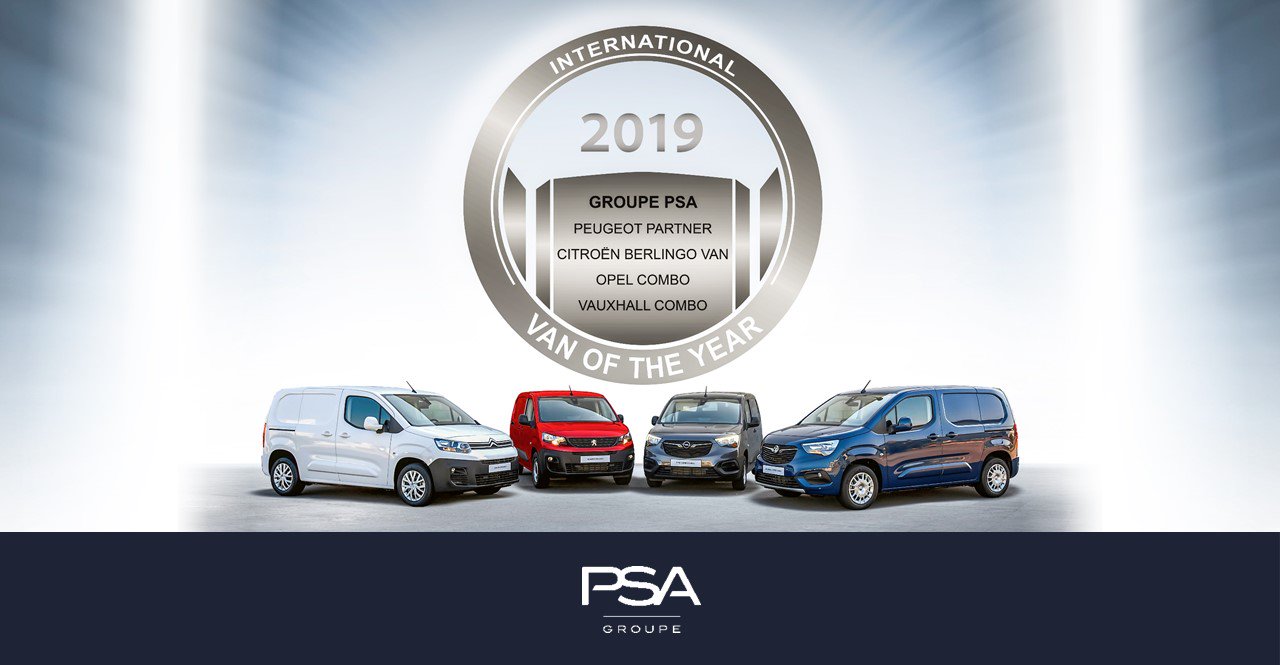
New Opel Combo Cargo voted International Van of the Year 2019

  • Commercial vehicle IAA: Opel CEO Michael Lohscheller accepts coveted award
  • IVOTY jury: 25 international journalists from 25 European countries
  • Previous Opel winners: Opel Astra Van in 1999 and Vivaro in 2002

New Opel Combo Cargo is International Van of the Year 2019


The new Opel Combo Cargo is International Van of the Year 2019 (IVOTY), the most coveted title in the Light Commercial Vehicle (LCV) business. Awarding the Combo 127 points, the jury of 25 specialist journalists from 25 European countries put the new Opel well ahead of the second-placed Mercedes Sprinter (92 points). The high driving pleasure, the innovative assistance systems and the economy of the Opel van played a decisive role in the new Combo bringing this prestigious award to Rüsselsheim for the third time since its introduction in 1992. Opel previously won the International Van of the Year award with the Astra Van in 1999 and with the Vivaro in 2002. The new Opel Combo has been developed by Groupe PSA and optimised to meet the needs of the brand. The prize-giving took place at the IAA commercial vehicle show in Hannover. Opel CEO Michael Lohscheller accepted the award for the Combo from IVOTY President, Jarlath Sweeney.

New Opel Combo Cargo at the IAA commercial vehicle show in Hannover.

“We are very proud of this award,” said Michael Lohscheller. “The victory also shows the possibilities for Opel within Groupe PSA. With the Combo we are now attacking the C-van segment – until now we have not played a prominent role here. There is great growth potential for Opel in the LCV business. It is therefore appropriate that we have received the responsibility for developing a new LCV platform for the whole Groupe PSA in Rüsselsheim.”

The IVOTY jury was highly impressed by the talents of the Opel Combo: “The engineers and designers succeeded for the first time in the history of LCVs to create a multi-brand cooperation van, where all brands maintain their core values and brand personality without almost any compromise. The PSA models are redefining the entire segment of modern compact vans, with a fresh approach in design, fit and finish on par with compact cars and a unique feeling of comfort.”

Groupe PSA LCVs
The jury also praised the numerous assistance systems of the Opel Combo, such as the sensor-based overload indicator and the excellent all-around visibility – the second camera in the passenger-side mirror, for example, reduces the blind-spot on this side of the vehicle. The Combo Cargo additionally scores with the equally new sensor-based Flank Guard.


The jury of journalists thus concluded: “The Groupe PSA small vans are convincing in more ways than one. They feature real novelties that are modern, comfortable and full of today's safety technologies. In use, they display a driving pleasure and generally very good levels of behaviour, without yielding anything to their utilitarian vocation. They offer professionals a wide choice of bodies and engines. Clearly a new reference in the world of vans.”

Highly efficient in every way

The new Opel Combo celebrates its world premiere at the IAA for commercial vehicles in Hannover (booth C 64, hall 13). The new Combo has been developed with the ambition of offering top efficiency to professionals and the lowest cost of ownership in the segment, thanks to an all-new architecture, ingenious packaging and a unique range of assistance systems resulting in an extremely efficient transporter.

New Opel Combo Cargo XL
From the start, the Opel Combo is available in numerous variants including the 4.40-metre standard version, the 4.75-metre XL type and a spacious five seater crew cab with two sliding doors as standard. Opel’s new compact transporter also outshines most of its main competitors with a load volume of up to 4.4m3, a payload of up to 1,000 kg and a loading length of up to 3,440 mm for objects and work material. The cleverly designed loading area is wide enough between the wheel arches to enable the loading of up to two Euro pallets – even in the Combo with short wheelbase. And extremely long utensils such as wooden planks can be stowed at an angle thanks to the optional roof hatch.